
This post is written by Guest Contributor, Janet Ochs Lowenbach. If you are also interested in writing a guest blog, please reach out using the form in the Contact page.
There are lots of names for what an on-camera flash does to a subject: Flash in the pan. Powder in the face. Deer in the headlights. They all mean the same thing, according to Duane Heaton, Sales Manager of Penn Camera in Rockville Pike, MD. “A small, on-camera flash provides very stark lighting conditions with harsh shadows, and it is very limited in the quality of lighting it provides; sometimes when the flash is so close to the lens, it produces red eye. Using an off-camera flash allows you to be more creative.”
Further, because of the digital camera’s inability to see a wide exposure latitude, you want to use a diffused flash (off camera) as much as possible to fill in the extremes of exposure. (To explain this example, film has an exposure latitude of 1:7, while digital cameras have an exposure latitude of 1:4.)
“When you add a second or even third light off the camera, you soften the light and the shadows, and minimize the extremes of exposure.” Heaton adds. “They give very directional light as well as energy to the scene.”

Nikon SB-900
Placement of the off-camera flash depends on what effects you want to achieve. A nice portrait effect results from placing the off-camera light 45 degrees from the subject, where it produces that classic upside-down triangle on the cheek when the subject is looking at you.
Heaton says there is no single brand flash that is better than another. “Canon, Olympus, and Nikon flashes are all good and each is synchronized with its own brand of cameras. Nikon and Canon have been industry leaders for years because of the sheer size of their companies, and now Sony is getting it to the mix,” he adds.
You can use a flash that is wired to the camera, but with the latest technology, you can use a remote, either a generic radio remote or a wireless one specifically designed for working with your flash. Each of these will permit you to place your flash away from the camera and give you more flexibility.
The radio remote works up to a distance of 400 feet, but requires you to adjust the flash manually. A wireless system permits you to control each flash through the unit, with a TTL system that lets you make adjustments from the unit, without moving to it.
The key to the flexibility is, Heaton says, the fact that, “The popular pop-up flash can be used as a command flash that controls the off-camera flash or flashes. The pop-up can take on many different roles including acting as a fill or being solely in the commander mode with no effect on exposure.”
Heaton says you can use more than one off camera flash as long as you know how to control the light and the camera settings so that the camera and the flash talk to each other.
“The system is proprietary, or a closed loop, says Heaton. So, you have to use Nikon flashes with a Nikon camera, a Canon flash with a Canon camera, etc.
Perhaps the hardest part of using flash in the TTP mode is the manual. You have to learn how to make the camera and the flashes talk to each other, but since the manuals are translated from the Japanese, they are often difficult to follow. “Nikons are menu driven and very intricate; you have to know what button to push and this is hard to translate in a manual from the Japanese. There is an even greater problem with digital cameras.”
Heaton and his colleague at Penn give hands-on training in flash use. He also says there are many opportunities outside the store for classes and one-on-one training. The problems with manuals, he says has expanded the opportunities for teaching and education.

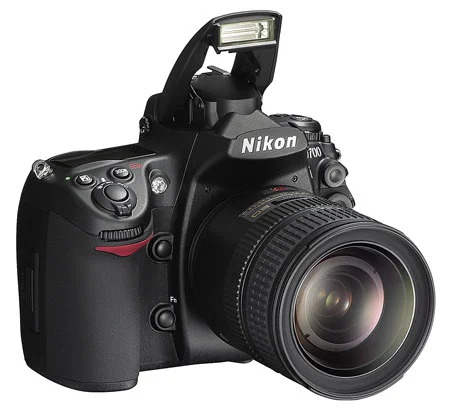



Almost all consumer level DSLRs and some of the pro level DSLRs come with the built-in flash. Professional photographers who shoot wedding, fashion, commercial portrait, or other special events do not rely on built-in flash to illuminate their subject. But, you don't have to use flash only when there is not sufficient natural light. It can also be used as a fill light to remove shadows or to add a catch light to the subject's eye. One of the best thing about the built-in flash is, you don't have to carry around an extra equipment and is always available on your camera, as long as the camera has sufficient battery power to charge and fire the flash. It can be put to use instantly whenever you want and doesn’t require any sophisticated setup. However, you need to understand few basics settings of your camera and should be comfortable navigating through the menu settings and the buttons on the camera.
Use of camera's built-in flash and its effect on the picture is determined by various settings on the camera, but most importantly, which metering mode you are currently using and what exposure mode you are on play a bigger role. Let's recap these camera metering modes briefly and then we can discuss about the steps we would be following in order to use on-camera flash. Since I wrote the blog about camera metering (in more detail) almost 9 years ago, Nikon has added a new metering mode; Highlight-Weighted Metering, which we will be discussing in the section below.