What Feature Do You Assign To The Function Button?

This post is a part of our Q&A section. If you want to submit your question, please use the form in the Contact page.

QA.jpg

Deepak (Mumbai, India) asked : What camera feature do you prefer to be assigned to the function button on a DSLR camera?

Deepak, to be honest with you, your question forced me to go back and see what are the other options available in the menu to assign to the function button. I always assigned only two of my favorite options and never looked back into other options. In the first part let me talk briefly about what is the function button and why should we use it? And in the second part I will explain what feature do I assign to the function button and why?

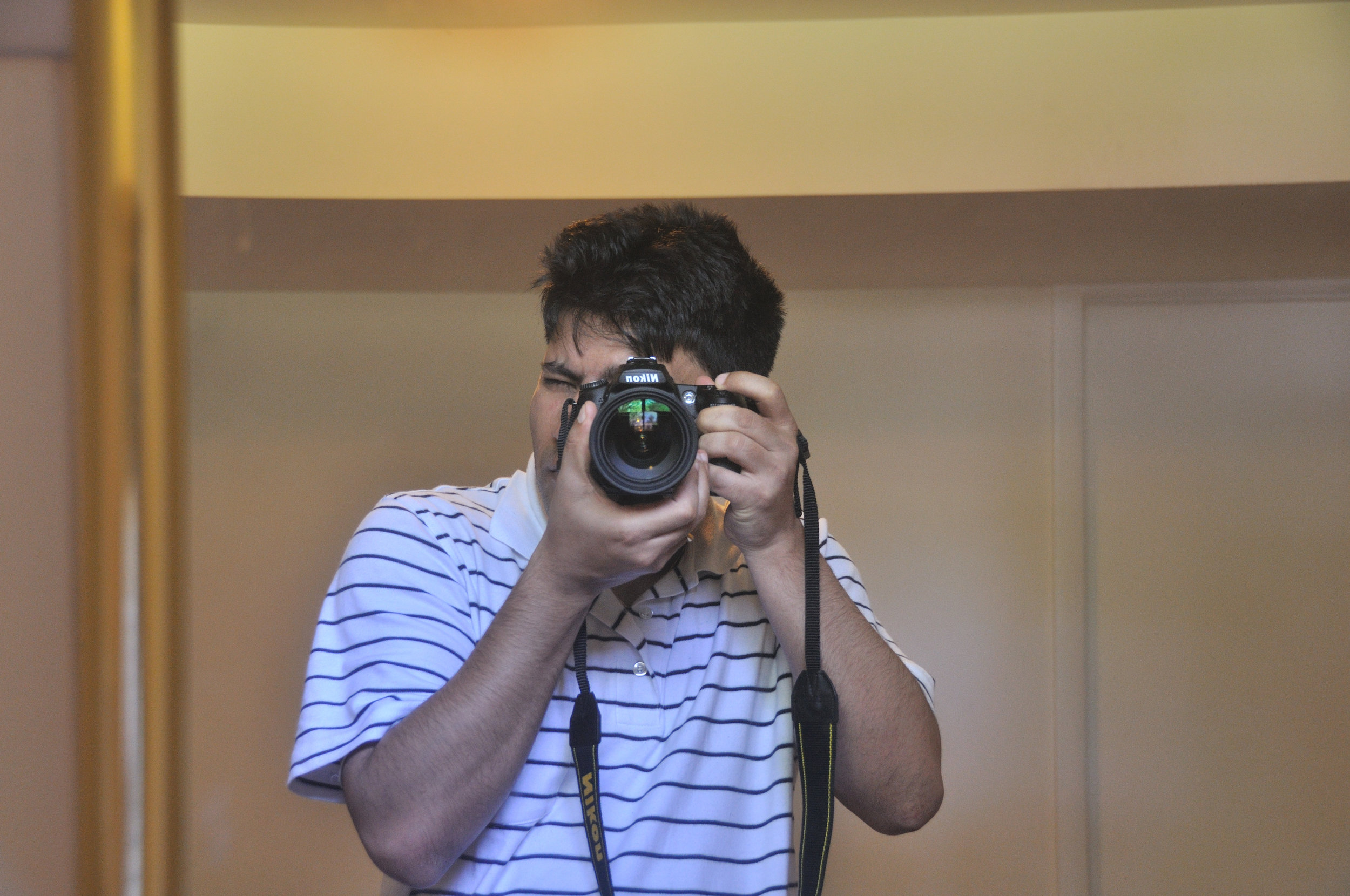
Nikon D90 Function (Fn) Button

Nikon D90 Function (Fn) Button

Function button allows you to change the particular camera setting without going deep down to the menu options. Once you assign the function button to the specific feature, whenever you press the function button, camera will adjust the setting for that particular shot. This feature comes very handy when you want to quickly alter the camera setting without wasting too much time navigating through the menu tree. Now let’s discuss how to assign one of the camera’s feature to the function button. In this example, I am taking Nikon D90 to refer to the menu items. If you use some other DSLR, your menu navigation might be little different.

Step 1 : Press the MENU button on the back of your camera

Step 2 : Go the Custom Settings Menu (pencil icon) and navigate down to f (controls).

Step 3 : Select f3 (Assign FUNC. button).

You have varieties of options available there such as spot metering, +RAW, matrix metering, center-weighted metering, flash off, framing grid, AF-area mode etc. Personally, my favorites are spot metering and +RAW mode. Why? Because I set the metering mode to the matrix metering by default and sometimes if I want to give the credit to the center of the subject for the metering purpose, I want to use the spot metering. When I am ready to shoot, I would then press the Fn button and the camera will use the spot metering for that particular shot and go back to the regular setting as soon as the picture is taken. And the same is true for choosing the +RAW mode as well. When I was beginning to learn the basics of photography, I always shot in JPEG Fine mode but once in a while I also took the RAW images to edit the picture later on the computer and learn more about the post-processing tools and techniques. So, whenever I wanted to take the RAW image, I pressed the function button and shoot with JPEG Fine+RAW mode for the particular shot so that the camera takes JPEG and RAW versions of the image and stores them into the memory.

You can play around with the options your camera has and decide which one you want to stick with for regular use. Thank you again for your question from which I also got chance to learn about other options my camera has. Happy shooting!
Learn About Nikon Creative Lighting System

Flash photography is a different world of creativity which requires a new experiment everyday. Adjusting a light, setting up the color temperature and creating the effects for your subject are some of the important aspects of flash photography. Most of the camera comes with a built-in flash unit and even if they don't, you can use the compatible external flash units to meet your needs for the extra light. You can use the built-in flash or the external flash unit if the natural light source (day light) is not working for you or if you do not have any external light source at all (dark situation). When you work everyday with the flash, you might want to do an experiment with the lights in different scenarios. Sometimes you want to use the direct flash to your subject, sometimes you want to use the bouncing flash or even kicker flash to give an extra ordinary effect to the subject. If you are just learning about the flash photography or do not have enough experience in flash photography, you might not get the exact result you want. As you learn more and gain more experience, you feel more comfortable with the settings which brings more confidence to you.

Guide-on-Nikon-CLS.jpg

If you are interested about the flash photography, you might be looking for some guides or helpful resources on how and where to start from. Don't worry, I have a good news for you. Nikon School has produced a DVD called Nikon School presents A Hands-on Guide to Creative Lighting featuring two prominent photographers, Joe McNally and Bob Krist. The DVD is professionally done and very well designed to give the most out of it to the viewers.

Total DVD is two and half hours long. The DVD begins with a detailed overview of basic lighting technique by Bob Krist. He explains everything about the technical aspects of Nikon flashes like CLS, i-TTL, Master flash unit, Remote flash units and working with the group flash units. He also demonstrates the light effect to the portrait photography by actually doing it inside his studio which I found very informative. You will get a chance to learn many things about the lighting by watching that part. Bob then introduces Nikon flash gears SB-600, SB- 800, SB-900, SU-800 as well as other flash kits.

In the second part, for about one and half hours, Bob Krist meets with Joe McNally at the ballet dance school in Boston where they shoot with the students and demonstrate how does the flash work in real life situation. Later, they go to few other locations and do the rest of the shootings. Joe McNally does the shooting part and Bob Krist is there assisting him. Bob asks lots of questions to Joe from the viewers perspective which is very helpful to understand the process of working with the flash in various lighting situations.

If you watch the DVD and practice as they suggest, you will be mastering Nikon Creative Lighting System very soon. I can't get enough of watching this DVD and learning new tips and tricks every time I watch the DVD.

Nikon 50mm f/1.4G AF-S Nikkor Lens

Nikon is a very well known brand in photo industry for it's high quality Digital SLR cameras to both amateur and professional photographers. Nikon is popular among many photographers not only because of it's well designed camera body but also wide variety of lenses it offers. Nikon is probably the best brand to use wide variety of the lenses for the older body as well as the newly designed body. They offer wide angle lens, telephoto lens, macro lens, prime lens and few other types to reach out the varieties of users all over the world. I will continue to write about their other types of lenses in the future but today lets talk about the Nikon 50mm f/1.4G lens. Among many other prime lenses Nikon offers, Nikon 50mm f/1.4G is one of the best prime lens and the favorite of many photographers. It is very well designed and built from the high quality materials. It got the metal lens mount and the high quality plastic to protect the internal lens glasses. It has a smooth rubber ring with a very nice grip for the manual focus.

Nikon-50mm-f1.4G-AF-S-Nikkor-Lens.jpg

It works perfectly on both FX format and DX format DSLR cameras. This lens has an Autofocus (AF-S) feature which works brilliantly on Nikon's entry level DSLRs like D40, D40x and D60 as well as high end professional camera like D3 or D3X. It is built with an Exclusive Nikon Silent Wave Motor (SWM) which enables fast, accurate, and quiet Autofocus. This prime lens is perfect for the low-light conditions because of it's wide open aperture. Nikon’s Super Integrated Coating (SIC) on the glass enhances the light transmission efficiency, offers superior color consistency and also reduces the flare. Nikon 50mm f/1.4G is the ideal lens for travel, event, environmental and general photography in a wide variety of conditions, with superb optical formula and an ultra-fast f/1.4 maximum aperture. It is an ideal portrait lens when used on a Nikon DX-format digital SLR, approximating the angle of view similar to that of a 75mm lens on a Nikon FX-format digital SLR. This lens can focus close up to 1.5 feet and can also be used to produce nice bokeh as well.

Despite of being very fast and high quality lens, it doesn't offer few common features that you might be looking for. If you are used to with the zoom lenses and composing the shots sitting in one position, this lens might disappoint you. Since, this lens doesn’t have a zoom feature, you might need to move front and back time to time to adjust the frame and compose your photograph. It's focal length is fixed and that's why it is called the prime lens as well. And also, this lens doesn't have an aperture ring (denoted by G letter) and will not work on manual focus camera where you need to set the aperture from the lens barrel. This lens doesn't have a Vibration Reduction (VR) feature which may be useful for taking handheld shots in a low light condition, specially, if the subject is moving or the photographer is not using a tripod. As of writing this blog, it was priced at $434.95 on amazon which could attract some of the buyers as well.

It may be an expensive piece of glass but when compared to the other wide-angle lenses or the zoom lenses, the Nikon 50mm f/1.4G lens might be the most affordable and yet more versatile lens. It's build quality and the small size also makes it an ideal lens for the travel.