MB-D80 Multi-Power Battery Pack

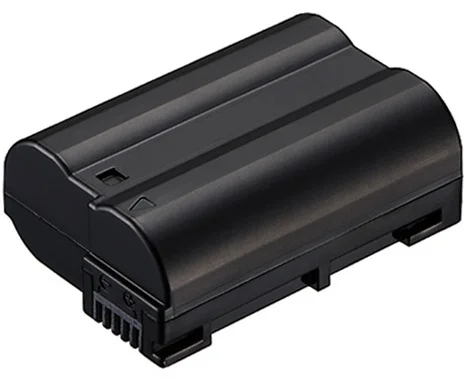
If you are shooting all day events using Nikon D90 or D80, MB-D80 might be your best friend. MB-D80 battery pack simulates many buttons of your Nikon D90 and D80 camera, gives you an extended battery life and provides easy, comfort and stable holding of your camera in different orientations. Specially, if you shoot portrait photographs most of the time, MB-D80 Battery Grip can make your life much easier. It will give you nice grip and provides stability for a long day shooting. MB-D80 runs on either one or two EN-EL3e batteries or six AA-size batteries. Nikon has listed AA-size alkaline, Nickel Metal Hydride (Ni-MH), lithium and nickel-manganese as a compatible batteries for MB-D80. However, it is not compatible with non-Nikon EN-EL3e batteries.

MB-D80-with-battery.jpg

The MB-D80 has a vertical shutter release button, main command dial (rear dial) and sub-command dial (front dial) which matches to the camera and it functions similar to the camera buttons as well. It also includes an AF-E lock button for an Autofocus exposure lock. In addition, you can also lock the shutter release button to prevent an accidental press.

Nikon D90 or D80 itself has a nice grip around the camera body but MB-D80 adds an extra grip for your camera. It is made out of very high quality materials from the Nikon products and feels solid and sturdy with the camera.

Even if there are lots of features and advantages of using it, some people are complaining about the softness of the shutter release button on MB-D80 grip. If you are used to with the camera shutter button, you may feel shutter release button on MB-D80 is little softer than real camera button and can have a chance of pressing it all the way down when you are just trying to press only halfway down for an Autofocus. But, I am sure you will be used to with it once you start using it more and more.

Nikon D90 with MB-D80 Multi-Power Battery Pack

Nikon D90 with MB-D80 Multi-Power Battery Pack

Some people think it looks bulky on their camera and don't want to use it. But personally, I think it adds great benefits to the camera by giving an extra battery life and an emergency backup for a long day shooting until the next recharge.
Using The Lens Hood

It's not necessary to use lens hood all the time but there are some benefits of using it. Lets discuss what are those benefits and you can decide whether you want to use it or not.

Benefits of using the lens hood

First thing is it helps to remove stray lights from different sources. It prevents the light from hitting the front elements of the lens, which will reduce the contrast and create flare caused by the excess light, from the sides. Generally, pictures taken using the lens hood are clearer with rich colors, balanced contrast and the deeper saturation.

Lens Hood

Lens Hood

Second purpose of using the lens hood is to protect your lens. We spend few hundreds to thousands of dollars buying lenses and may be it is a good idea to protect it against any accidental physical damage or scratch on the front elements of the lens. Lots of professional photographers and personally, I also use the lens hood most of the time to protect my lenses. Good quality lens hoods are made out of strong and good quality plastic which can prevent your lens from accidental scratch or damage. And the good thing is, it doesn't cost much if it doesn't already come with your lens. You can buy the lens hood from $10 to $100 depending upon the quality and the average price is around $30. So why not spend that much money to protect your several hundreds or thousand of dollars worth lenses, right?

When not to use the lens hood?

This is my personal experience and may not be an issue with other photographers but I found an extra shadow in the photographs when I use the lens hood in the dark area and shooting with the built-in flash. I think it's probably because of the lens I was using (18-200mm) and since the height of the built-in flash is not much, the hood might have blocked the part of the flash and caused a strange shadow on my photographs. If you are using a wide angle lenses or short prime lenses, you might be able to use it without any such problem.

Some photographers do not like to use the lens hood when they are using the polarizing filter. But I use an UV filter and the lens hood all the time together and I have had no issues shooting with it in a bright day light condition.

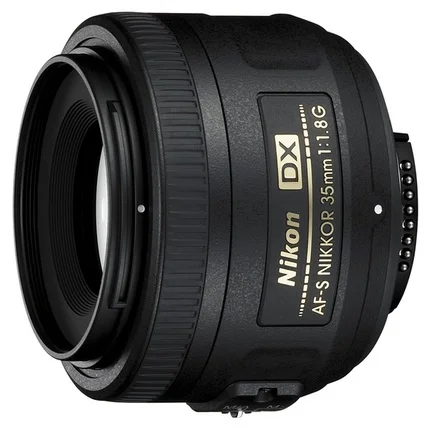
Nikon 35mm f/1.8G AF-S Lens Review

Nikon 35mm f/1.8G AF-S is designed and built for Nikon DX-Format digital SLR camera. This lens is built with Nikon Super Integrated Coating (SIC) to enhance the light transmission efficiency and offers superior color consistency. Nikon built this lens with an exclusive Nikon Silent Wave Motor (SWM) which enables it for fast, accurate and quiet Autofocus on Nikon's entry-level DSLR camera like D40, D40x, D60 and D5000 which lacks the internal motor to use lens in Autofocus mode. One of the key element to get this lens is the price of the lens. It comes with less than half the price of many other DX format standard prime lenses currently in the market. At the time of writing this blog, it was selling on Amazon for $197.04. If you really want to try the lens but you don’t want to spend that much money, there are places from where you can rent the lens.

Nikon 35mm f/1.8G AF-S Prime Lens

Nikon 35mm f/1.8G AF-S Prime Lens

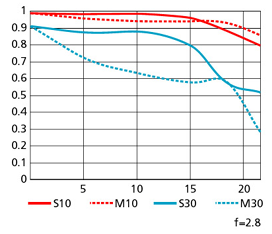
Along with all the promising features, the lens's performance is very impressive compared to it's price. It produces really sharp and finely detailed images in al aperture value. It focuses very quickly and accurately. It is very light weight and fits into a small package. If you are traveling a lot with your camera, this lens will be a huge advantage for you to carry around. It is almost 4 times cheaper than Nikon AF-S 18-200mm F3.5-5.6 DX VR II lens but produces much sharper images with close focusing up to 1 foot. It is very fast and f/1.8 aperture is perfect for the low-light condition.

The AF-S Nikkor 35mm F/1.8G has two focus modes, M/A (manual override Autofocus) and M (manual focus). The M/A mode enables instant manual switching during AF operation. The lens also features a rubber seal to minimize the moisture ingression around the mount and accepts 52mm filter attachments.