
If you are looking for something that can hold your flash unit anywhere you go, Manfrotto 175F-1 spring clamp could be your best option. This clamp is a great product and should be a part of any strobist's basic lighting kit. It provides a great amount of versatility and can be attached to a light stand or clamped into anything. The ball head socket allows you to position your flash in any position you like, allowing you to create your shot however you envision it. It takes only few seconds to clamp it onto to a piece of furniture without fear of marring a surface due to the small rubber feet built into the clamp.

Manfrotto 175F-1 spring clamp
It is very handy for mounting the flash units like SB-600 or SB-800 in places where you can't use the light stand. It clamps very well and it's secure. The plastic cold shoe fits the strobe nice and sung so that you don't have to worry about the strobe falling out. The clamp end is strong and grips things very well. It also has a standard light stand stud on it and a clamp as well to accept a stud from the light stand. It can hold up to 4.41 lbs and rotates 360 degree. The clamp is made up of aluminum and steel and it weighs about 0.73 lbs.
Manfrotto brand is known for the quality products. I own several products from Manfrotto like 055XPROB pro tripod, spring clamp, 498RC2 ball head. They are excellent quality products and I love them. Their build quality is extremely strong and sturdy. Their products are little expensive than what you get in a regular market (non-brand item) but worth every penny and it will pay you off in the future.

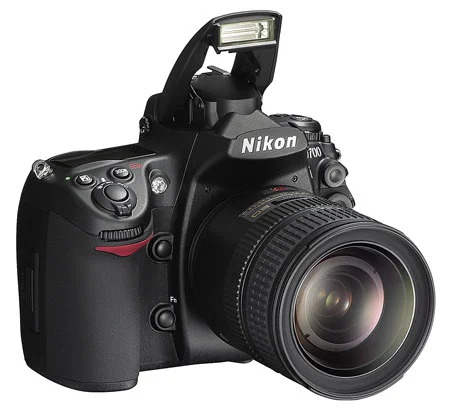



Almost all consumer level DSLRs and some of the pro level DSLRs come with the built-in flash. Professional photographers who shoot wedding, fashion, commercial portrait, or other special events do not rely on built-in flash to illuminate their subject. But, you don't have to use flash only when there is not sufficient natural light. It can also be used as a fill light to remove shadows or to add a catch light to the subject's eye. One of the best thing about the built-in flash is, you don't have to carry around an extra equipment and is always available on your camera, as long as the camera has sufficient battery power to charge and fire the flash. It can be put to use instantly whenever you want and doesn’t require any sophisticated setup. However, you need to understand few basics settings of your camera and should be comfortable navigating through the menu settings and the buttons on the camera.
Use of camera's built-in flash and its effect on the picture is determined by various settings on the camera, but most importantly, which metering mode you are currently using and what exposure mode you are on play a bigger role. Let's recap these camera metering modes briefly and then we can discuss about the steps we would be following in order to use on-camera flash. Since I wrote the blog about camera metering (in more detail) almost 9 years ago, Nikon has added a new metering mode; Highlight-Weighted Metering, which we will be discussing in the section below.